🪪How Your ID Can Create Problems with Your Mortgage Closing🚧
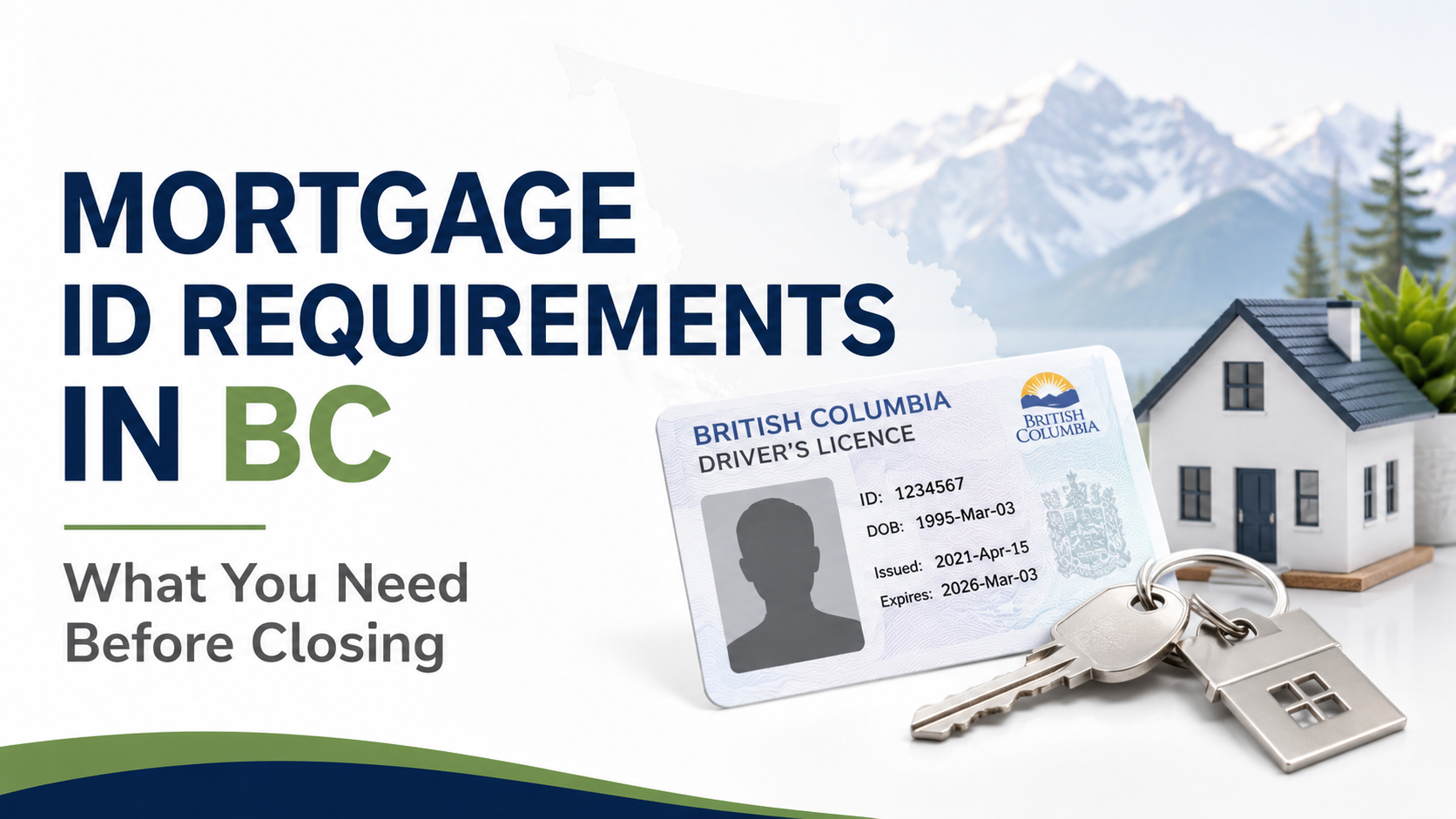
Mortgage ID Requirements in BC: What You Need Before Closing
When applying for a mortgage in British Columbia, your lender will need to verify your identity. That part is not surprising. After all, they are lending you hundreds of thousands of dollars, and in many cases, much more.
For most borrowers, providing ID is a simple step in the mortgage approval process. However, small ID issues can sometimes create delays at closing if they are not caught early. Your ID may be expired, show an old address, use a different name than your application, or not meet the lender’s requirements.
The good news is that these problems are usually easy to prevent. By understanding what ID is typically required for a mortgage in BC, you can avoid last-minute stress when it is time to sign your closing documents.
Why Mortgage Lenders Need Your ID
Mortgage lenders, brokers, and lawyers must confirm that you are who you say you are. Identity verification helps satisfy anti-money laundering requirements, protect against fraud, and ensure that the person signing the mortgage documents is the correct borrower.
In most cases, you will be asked to provide two pieces of valid identification. Usually, one piece must be government-issued photo ID, while the second piece may be another accepted form of ID.
Requirements can vary depending on the lender, insurer, lawyer, or mortgage type, so it is always best to confirm what is acceptable early in the process.
Primary ID for a Mortgage in BC
Your primary ID is typically the most important piece because it confirms your name, photo, and identity.
Examples of commonly accepted primary ID may include:
- BC driver’s licence
- Combined BC Driver’s Licence and Services Card
- Photo BC Services Card
- Passport
- Canadian citizenship card
- Canadian permanent resident card
- BCID card
- Other government-issued photo ID accepted by the lender or lawyer
Your primary ID should be clear, valid, current, and not expired. The name on your ID should also match the name used on your mortgage application.
Can You Use a BC Services Card as ID for a Mortgage?
In BC, a Photo BC Services Card or a combined BC Driver’s Licence and Services Card may be acceptable as government-issued photo ID, depending on the lender, lawyer, and verification requirements.
This is different from some other provinces where health cards are often not used for identity verification outside the health-care system.
That said, not every version of the BC Services Card is the same. A non-photo BC Services Card does not provide the same level of identity confirmation as photo ID. If you only have a non-photo card, you may need to provide additional government-issued photo ID.
Because mortgage requirements can vary, confirm with your mortgage professional, lender, or lawyer before assuming your card will be accepted.
What if You Do Not Have Photo ID?
Not everyone drives or travels, so not everyone has a driver’s licence or passport. If you do not have acceptable government-issued photo ID, you should deal with this before starting the mortgage process.
For BC residents, possible options may include applying for a:
- BCID card
- Photo BC Services Card
- Passport, if applicable
Do not leave this until the last minute. If you wait until your mortgage is approved or your closing date is approaching, you may not have enough time to receive updated ID before signing.
Secondary ID for a Mortgage
In addition to your primary photo ID, you may also be asked to provide a second piece of identification.
Examples of secondary ID may include:
- Birth certificate
- SIN card or confirmation of SIN
- Credit card
- Other lender-approved identification
The exact list of acceptable secondary ID can vary, so always ask your mortgage professional, lender, or lawyer what they will accept.
Also, be prepared to provide both sides of each piece of ID when requested. Passports are often the exception because the required information is usually contained on the photo page.
Make Sure Your Address Matches
Your lender may need to confirm that you live at the address listed on your mortgage application.
If your ID shows an old address, or you use a mailing address such as a parent’s home, this may create questions during the approval or closing process. It does not always mean there is a major problem, but you may need to provide additional proof of your current address.
Acceptable proof of address may include:
- Utility bill
- Cell phone bill
- Bank statement
- Credit card statement
- Government correspondence
- Lease agreement or other acceptable supporting document
The document should show your name and current address. If you do not have anything that confirms where you currently live, you may need to update your ID or provide alternative documentation before closing.
Check That Your ID Has Not Expired
Your ID must be valid when your mortgage closes.
If your driver’s licence, BCID, BC Services Card, or passport is expiring soon, renew it as early as possible. A piece of ID that is valid today but expired by the closing date may not be accepted when you sign your final documents.
This is one of the easiest things to overlook. Borrowers are often focused on income documents, down payment confirmation, appraisals, insurance, and legal paperwork. But an expired ID can still slow things down.
Watch for Name Differences
Another common issue is a name mismatch.
For example, your mortgage application may use your married name, while your passport still shows your previous name. Or your ID may include a middle name that is missing from your application.
If your name appears differently across your documents, tell your mortgage professional as early as possible. You may need to provide supporting documentation, such as a marriage certificate, legal name change document, or other proof that confirms the name difference.
How to Avoid ID Issues Before Closing
Before you get too far into the mortgage process, take a few minutes to check your identification.
Ask yourself:
- Do I have valid government-issued photo ID?
- Is my ID expired or expiring before closing?
- Does my ID show my current legal name?
- Does my address match my mortgage application?
- Do I have a second piece of acceptable ID?
- Do I have proof of address if my ID shows an old address?
These simple checks can help prevent unnecessary delays when your lawyer is preparing the final mortgage documents.
Final Thoughts
ID is one of the simplest mortgage documents to provide, but it is also one of the easiest to overlook.
Before your mortgage closing in BC, make sure you have acceptable, valid, and current identification. If you do not have government-issued photo ID, look into getting a BCID card, Photo BC Services Card, or another accepted form of ID as early as possible. If your address or legal name has changed, deal with it before closing rather than waiting until the final signing appointment.
Taking care of these details early can help make your mortgage approval and closing process smoother, less stressful, and easier to manage.